
Expansion
What is a Palatal Expander?
A palatal expander is a custom orthodontic appliance designed to gently widen the upper jaw. It is most commonly used in children and early teens whose jaws are still developing. By creating more space in the upper arch, a palatal expander helps guide proper jaw growth and sets the foundation for a healthier, more balanced smile.

Benefits of a Palatal Expander?
Palatal expanders do more than create space. They can support both dental health and facial development.
- Creates room for crowded or incoming permanent teeth
- Helps correct crossbites and bite imbalances
- Supports proper jaw growth and facial symmetry
- Can reduce the need for tooth extractions later
- May improve breathing and airway development in some patients
Early treatment with a palatal expander often makes future orthodontic care simpler and more efficient.
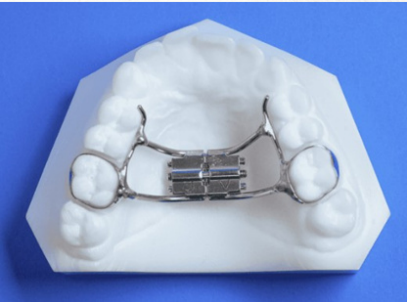
How a Palatal Expander Works
A palatal expander fits comfortably along the roof of the mouth and is anchored to the upper teeth. Over a short period of time, the appliance is adjusted gradually to widen the upper jaw.

Guide
Small, controlledadjustments gently guidethe jaw to expand

Expansion
Expansion typically occursover a few weeks

Stabilize
The appliance remains inplace for several months tostabilize results

Monitor
The process is gradual anddesigned to be safe andeffective
Because the upper jaw bones are still flexible in growing children, palatal expansion can be achieved predictably and
comfortably when timed correctly.
Who is a Good Candidate?
Palatal expanders are most effective for children and preteens, often between ages 7 and 12. Early orthodontic evaluations
help determine whether expansion is recommended and when the timing is ideal.
How to Turn Your Child’s Palatal Expander
Parents play an important role during the active expansion phase.
Follow these steps exactly as instructed by your orthodontic team.
Follow these steps exactly as instructed by your orthodontic team.
STEP 1
In a well-lit area, have your child lie back or gently tip their head back so you can
clearly see the expander.
Step 2
Insert the expander key into the small hole until it is fully seated and firmly in place.
STep 3
Push the key smoothly toward the back of the mouth. You will notice the screw rotate
and a new hole appear. Continue pushing until the key reaches the back of the
expander and stops.
STep 4
Press the key back and down toward the tongue to remove it. The next hole for
insertion should now be visible, indicating the adjustment is complete.
Tip: If you are ever unsure whether a turn was completed correctly, do not force
another turn. Contact our office and we’ll be happy to help

Expansion FAQs
What You Need To Know
Does a palatal expander hurt?
Most patients feel pressure or mild discomfort for a short time after adjustments, but it is typically well tolerated and fades quickly
How long does a palatal expander stay in place?
Most expanders are worn for 7–9 months. However if braces are also involved, the typical duration is 9-12 months. Active expansion takes just a few months; then, we leave it in while new bone fills and stabilizes. We’ll let you know how things are progressing at each appointment.
Will my child have trouble speaking or eating?
There’s usually a short adjustment period. Some kids notice a difference with certain sounds at first, but most adapt within a week or two. We recommend soft foods and avoiding anything sticky or crunchy while the expander is in place.
How do we keep a palatal expander clean?
Rinse with water after meals and use a soft toothbrush or water flosser to clear food from around the expander. Regular brushing and flossing still apply. We’ll walk you through our recommended routine at your appointment
Does using a palatal expander mean braces will not be needed later?
Not necessarily. Expansion creates the space your child’s smile needs to develop properly — but many kids do go on to braces or clear aligners to fine-tune alignment.